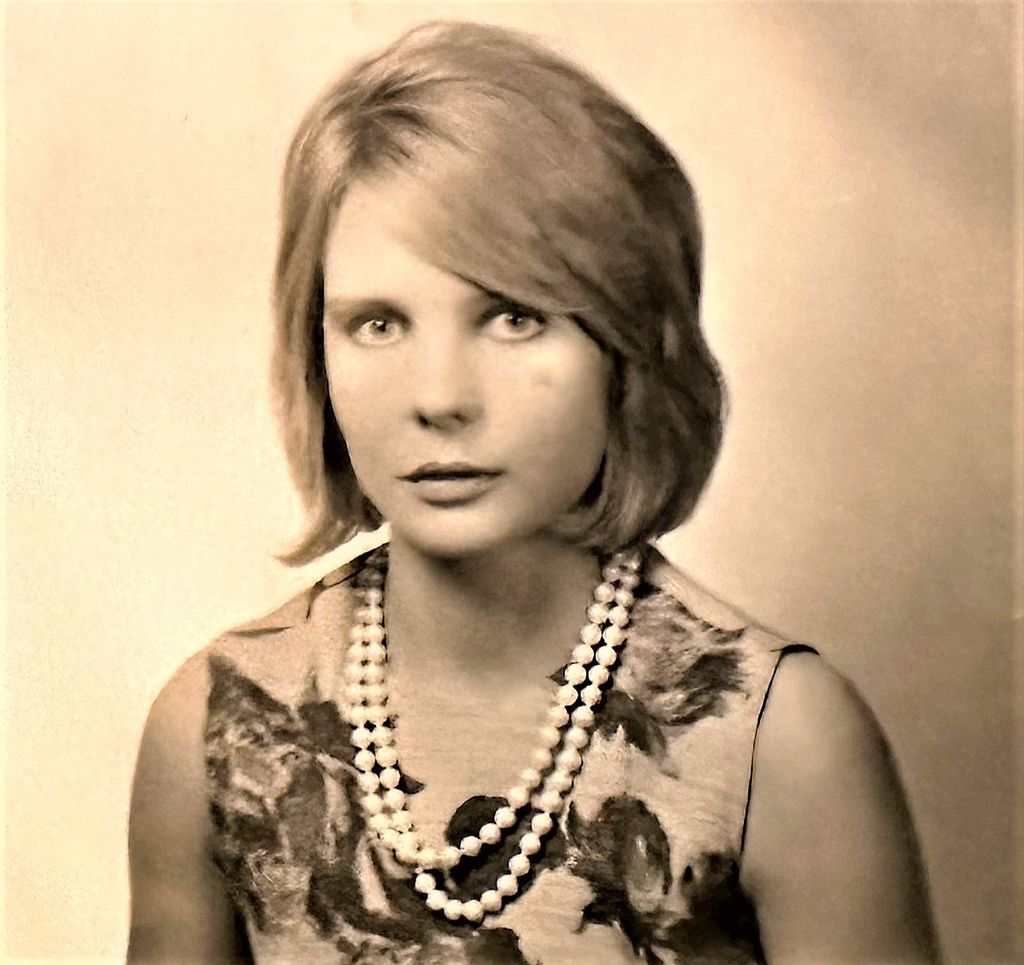
Obituary – Maria Cristina Solari Barrandeguy de Ortiz, d. August 5, 2023 Maria Cristina ('Cristina') was born in Buenos Aires, Argentina, on August 12, 1938, first-born child to parents, Ismael Solari Amondarain, and Maria Esther Barrandéguy Lasarte. Her father moved to Buenos Aires in 1922, at age 18, from his hometown in Dolores, Soriano, Uruguay, at the height of Argentina's multi-decade immigration and expansion boom, finding enormous success in the city as a writer, journalist, and entrepreneur. Following his Solari family's historical legacy - lawyers and writers deeply involved with the Colorado Party during Uruguay's political development as a nascent republic in the 19th century - Ismael traveled to Spain, France, the Soviet Union, and the U.S. during the 1930's to experience the fervent movements of the time firsthand. Ismael was a prolific writer, well-known in Buenos Aires for his articles on culture, history, and politics. Ismael married Esther in May 1937 and Cristina was born the following year. She lived with her parents and younger brothers, Juan Francisco (affectionally, 'Pango'), and Marcelo, in the bucolic San Isidro neighborhood, just north of Buenos Aires. She attended the Michael Ham Memorial College in Vicente Lopez, Buenos Aires, learning English at age 4. Her family socialized with the sprawling local Anglo-Argentine community and openly supported the WWII allies. She collected tin wrappers from chocolates and sweets to send to Britain as a small girl and vividly remembered exuberant 'VE Day' celebrations sweeping the city, April 1945. Ismael's family life and fortune were altered in late 1951 when his prefabricated housing business in Córdoba, Argentina, founded with English business partner, Mr. Boot, fell victim to Eva Perón's populist measures. The Fundación Eva Duarte issued a formal order, requesting 'numerous houses be delivered to the "foundation"', an effective expropriation. Ismael was targeted for political reasons and was forced to leave Argentina in early 1952, never to return, arriving in Montevideo, by way of Brazil, joined shortly thereafter by Esther, Cristina, and Marcelo. Mr. Boot was detained by local authorities in Buenos Aires, requiring the direct involvement of the British Consulate to secure his release. Cristina attended The British Schools of Montevideo, in Pocitos, during the 1950's, establishing life-long friendships and an ideal academic preparation for her career in law and economic development. Cristina excelled at the Facultad de Derecho, Universidad de la República, graduating as the republic's first woman to receive the Doctor en Diplomacia international law degree, in December 1959. Her 1959 juris-doctoral thesis addressed the international legal framework made possible by the myriad agreements and organizations originating from the foundation of the U.N. in the post-WWII era, all birthed from the Great Powers meetings at the end of the war. Cristina was célebre at the University for passing all her law school exams with sobresaliente marks. While assisting others preparing for a particularly challenging exam, she caught the eye of fellow law student, José Pedro Ortiz Canessa, who was quickly enamored with her beauty, intelligence, and caring character. His courting was ultimately successful, as Cristina fell in love with his insightful views and handsome nature; they would be together until her passing. Cristina actively sought professional opportunities in international policy and diplomacy, attending the landmark August 1961 OAS meeting in Punta del Este, an experience which encouraged her to follow her career further abroad. She traveled to New York City in late 1961 to interview with the U.N. and learned the recently founded Inter-American Development Bank ('IADB') in Washington, D.C. sought legal officers. Cristina traveled by rail to D.C. and was hired by the bank's Office of the General Counsel, where she initiated a decades-long career with the multilateral institution. Cristina lived in Rosslyn, VA, with Norma Coates, her close friend from The British Schools in Montevideo, during her initial months at the IADB. José Pedro maintained communication with Cristina and continued his studies at the Facultad de Derecho in Montevideo, while clerking for a Judge in the local courts. With Cristina's arrangements, José Pedro traveled to join her, landing at Dulles Airport in late 1962. Like Cristina, Jose Pedro also found work at the Inter-American Development Bank in Washington, DC. Shortly thereafter, they married in an intimate ceremony in Miami, FL., exchanging their vows in the company of only their marriage officiant, cementing an enduring and inspiring partnership. Cristina and José Pedro lived their newlywed years with a spirit of adventure, touring Europe for their honeymoon, then annually every summer, starting a family tradition. Cristina was very dedicated in her new career, working diligently in the IADB's General Counsel office throughout the 1960's, while assuming increasingly relevant project development and policy formation roles. In 1971, the IADB awarded Cristing with a new position running regional economic integration projects, a role she would retain until 1983, when then-IADB-president, Ortiz Mena selected her to lead the bank's operations in Bolivia, as Country Representative. Working as a team, Cristina and José Pedro purchased their first home in Bethesda, MD., obtained their M.A. degrees in economics at George Washington University and settled into a world entirely distinct from the one they had known in Uruguay. They had three children (Rodrigo, Javier, and Ximena) in little more than three years – from 1968 to 1971. Their homes in Bethesda (first in Marjory Lane and then on Bent Branch Road) became hives of intellectual discussion, centering on the political and economic development of Latin America. Equally important, these homes were the destination for the gatherings of close friends and family, with Cristina's collection of handblown wine glasses and handsewn table clothes gracing the tables inside and out. Jose Pedro's signature chimichurri was the piece de resistance of numerous backyard asados with family and close friends. Cristina and Jose Pedro spent their time off playing tennis all over Bethesda – and eventually at Bretton Woods Country Club – raking leaves with their children and relaxing at home. Cristina's family made annual pilgrimages back to Uruguay over the Christmas and New Years holidays, enjoying the countryside, the beach, and, most importantly, the Carrasco neighborhood of Montevideo, always surrounded by friends and family. Sundays were a special time for Cristina and her family, centering around a tea-for-dinner family ritual, always laid out for casual enjoyment in the much-beloved 'glass room' of the Bent Branch home. Unlike the usual formal dinners that were the routine, these teas consisted of hot sandwiches, chocolate cake and Souchong tea. Cristina was deeply involved with her children's education, enrolling them in their local Bethesda elementary school, Wood Acres, and sending them to the Escuela Argentina every Saturday, where they assisted weekly classes, learning Argentine history and social studies, Spanish grammar, and literature. All three children graduated from The Maret School, Washington, D.C., a family tradition followed by Ximena's children, Emma, and Quinn. During the 1970s, Cristina's IADB career was focused on its critical regional economic integration programs, involving active policy development with local government partners and direct project management. Much of her work involved developing large infrastructure projects during the period, such as her collaboration with the 1978 feasibility mission for the planned multi-billion-dollar Argentina-Paraguay Yacyreta Hydroelectric project. Cristina frequently assisted relevant regional conferences and policy meetings with governance constituencies, establishing her reputation for effective leadership and innovative problem solving. In 1983, Cristina was selected as the IADB's first woman 'Country Representative'. She was assigned to Bolivia, leading the bank's national operations, and overseeing project execution for bank funded programs from its offices in the administrative capital, La Paz. Working in development amid dire poverty would lay the groundwork for her subsequent appointment leading the IADB's micro enterprise program in Washington, DC. In the 1990's, Cristina was selected as the IADB's first woman 'Division Head'. In this role, she led efforts to develop the region 'from the bottom up', stripping concepts around entrepreneurial development and capital formation to their barest, simplest form. Local entrepreneurship education, with a focus on women-led development in the most marginal environments, was actively addressed and expanded during her tenure. Micro enterprises benefitting from IADB-financed programs were primarily women-led, often consisting of little more than a few sewing machines and a handful of employees. This 'local micro-development' strategy represented a marked departure from the billion-dollar projects from her prior focus. Regional microenterprise-led development programs in Latin America continue apace today, deriving much of their relevance and established best practices from Cristina's efforts over three decades ago. Cristina always celebrated her children's successes in banking, finance, and journalism and took special care to maintain the vitality and unity of her family. Unsurprisingly, Cristina's last battle on this earth was one of great distinction. After contracting multiple sepsis-infections, Cristina entered the tiny fraction of patients her age to stake a recovery from this destructive condition. Although she was tragically taken by subsequent infection, she wasted no time during her painful recovery phase, giving instructions on Jose Pedro's care, reaching out to loved ones in a meaningful way, and deepening her spiritual reflection and communion. During this difficult period, she was cared for by her family and two women from the Dominican Republic of unparalleled dedication and faith. Neyda and Estela will always be remembered by Cristina's family for their extraordinary caring. Cristina was a woman of great will, responsibility, love and perception. These traits carried her through all the decades of her life, right to her final moments. For someone so driven, Cristina was distinctly able to condense her focus and awareness to whatever simple pleasure she was enjoying at that moment - a beautiful morning, a dip in the ocean, an evening walk or gazing at the sunset. She could prepare a plan for regional economic development and consider the flowers she was to plant on her deck with equal importance. Ever the planner, she delighted in crafting the menus ahead of family reunions and discussing them in detail. Cristina was assertive and unflinching in her life's journey, yet innocent in the way she held her love for her family. She received love from her family fluidly, a kind of photosynthesis of emotional nourishment that circulated through all her being. Surely, she might be called, 'a tough act to follow' – and she was, indeed, 'tough' – but she was never acting. She was '100% Maria Cristina', sometimes to her detriment, but to everyone's awe. Even while valiantly battling the attacks on her body that ultimately took her life, she pointed out the things that needed to be done, and her worry about José Pedro's care. We cannot see her or point out to her the colors of a particularly glorious sunset, yet we feel her all around us. Even in her physical absence, she enfolds and surrounds us with her love and caring, and the intensity of her brilliance. She is here, supporting all of us. And she has passed down a little Maria Cristina to all of us. Ximena, Javier, and Rodrigo – August 2023